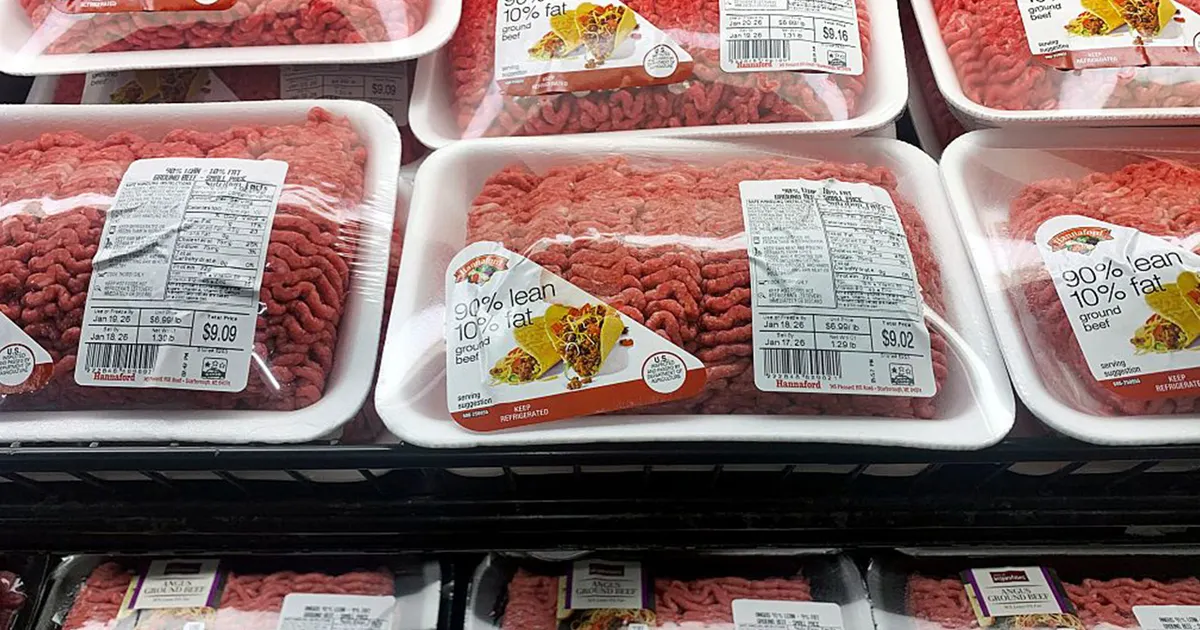
FILE – Ground beef display at grocery storeGround beef display at grocery store. (Photo by: Plexi Images/GHI/UCG/Universal Images Group via Getty Images)
Read more Supreme Court rules states can count late-arriving mailed ballots, rejects Trump-led challenge
Scientists at Auburn University say consumers are throwing out perfectly edible food, specifically their meat products.
The “best-by” dates on packaged food are overly conservative and researchers say it contributes to thousands of pounds of food waste each year.
What they’re saying:
“The average American wastes more than 1,000 pounds of food each year,” according to Auburn University researchers.
Big picture view:
The Auburn study focused on meat sell-by dates, which are commonly used by retailers to indicate how long products should remain on store shelves.
A change in color doesn’t necessarily mean meat is unsafe to eat.
Sell-by dates for meat are typically four days after packaging, the news release said.
They’re “based on when the beef will start to lose its bright pink color, rather than when it becomes unsafe to eat.”
“If a consumer sees that on day three their meat is brown, and it’s around the ‘sell by’ date, they might think it’s spoiled, but in fact it’s just quality degradation,” said Isabella Gafanha, an Auburn master’s student who was involved in the research. “It’s still fine to eat.”
Dig deeper:
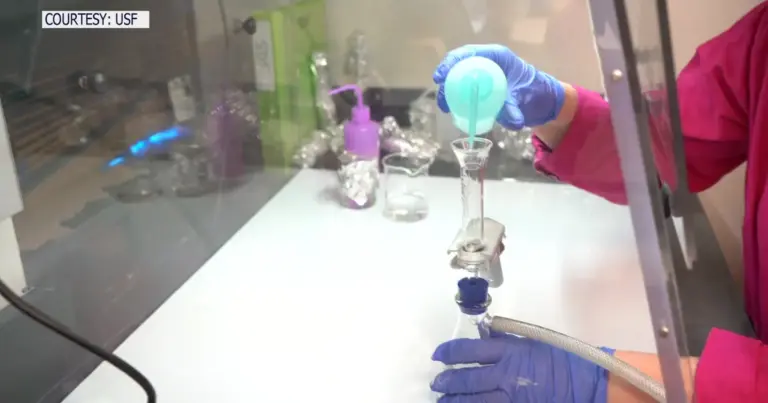
Researchers used a machine to track changes in microbial communities in packages of ground beef over the course of 14 days.
The goal was to “associate those changes with key changes in the meat quality and indicators of spoilage.”
Ultimately, though, the researchers were “able to determine that spoilage patterns could be predicted, demonstrating the concept can work,” the release said.
What’s next:
Researchers plan to continue their work to create more accurate sell-by dates while reducing the pounds of meat unnecessarily discarded each year.
“From a leadership perspective, this represents a rare opportunity where profitability and sustainability may align rather than compete,” Darin Detweiler, a food safety policy expert and professor at Northeastern University’s College of Professional Studies, told Fox News Digital.
About the Author