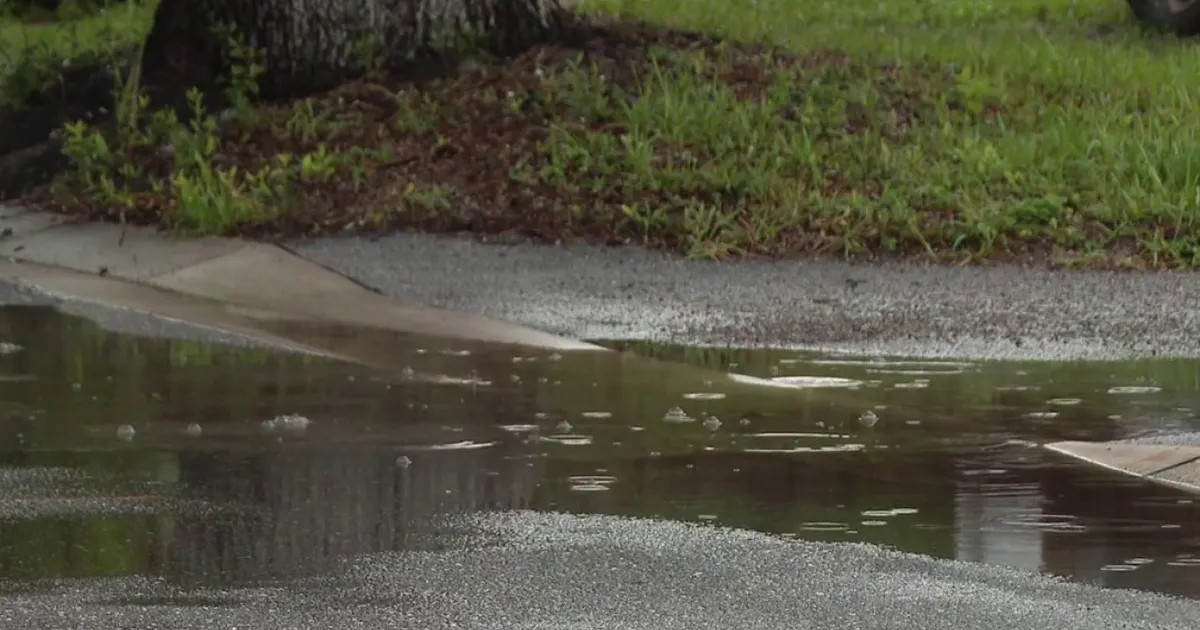
ST. PETERSBURG, Fla. – St. Petersburg officials are securing more than $2 million in federal grant funds to accelerate major drainage improvements along flood-prone corridors on MLK Jr. Street South and Fourth Street North near 88th Avenue North.
Read more Search underway for Palmetto man accused of firing shots at Booker High School: Officers
St. Petersburg flooding drainage projects
What we know:
Congresswoman Kathy Castor and St. Pete Mayor Ken Welch announced the federal funding during a joint press conference Monday. The investment will speed up stormwater infrastructure projects along MLK Jr. Street South and Fourth Street North near 88th Avenue North.
Crews will install larger stormwater pipes and additional drain grates to clear water off flooded streets. City officials noted that water currently accumulates faster than older pipes can process during heavy storms.
Both infrastructure projects carry estimated price tags of about $10 million each. Federal funding will cover between 5% and 10% of each project, helping prevent local utility rate hikes.
Local roadway impact and community relief
The backstory:
Flooding from recent storms and Hurricane Milton severely impacted surrounding neighborhoods, including areas near Lake Maggiore where roads were blocked and residents were trapped. Longtime residents described flat, aging drainage pipes that leave rainwater with nowhere to flow.
Read more Historic show hopes to raise cash for St. Petersburg City Theatre
City leaders stressed that MLK Jr. Street South and Fourth Street North serve as vital daily transit corridors. Severe flooding along these routes regularly cuts off access to medical facilities, schools, offices and emergency services.
Long-term citywide resiliency goals
What they’re saying:
Castor emphasized the urgency of upgrading infrastructure to withstand increasingly frequent extreme weather events. Welch added that federal resources remain critical to combating local impacts brought on by climate change.
Public Works Administrator Claude Tankersley pointed out that severe street flooding directly hinders emergency vehicles, including fire engines and police cars. Councilmember Deborah Figgs-Sanders noted that strengthening these key corridors improves safety for thousands of daily commuters.
Future construction timelines
What’s next:
City leaders anticipate completing the upgrades to be done in between 2028. They plan to spend $2.7 billion over the next 24 years on citywide resiliency projects.
Read more Hillsborough County: Special needs storm shelter pre-registration opens
About the Author