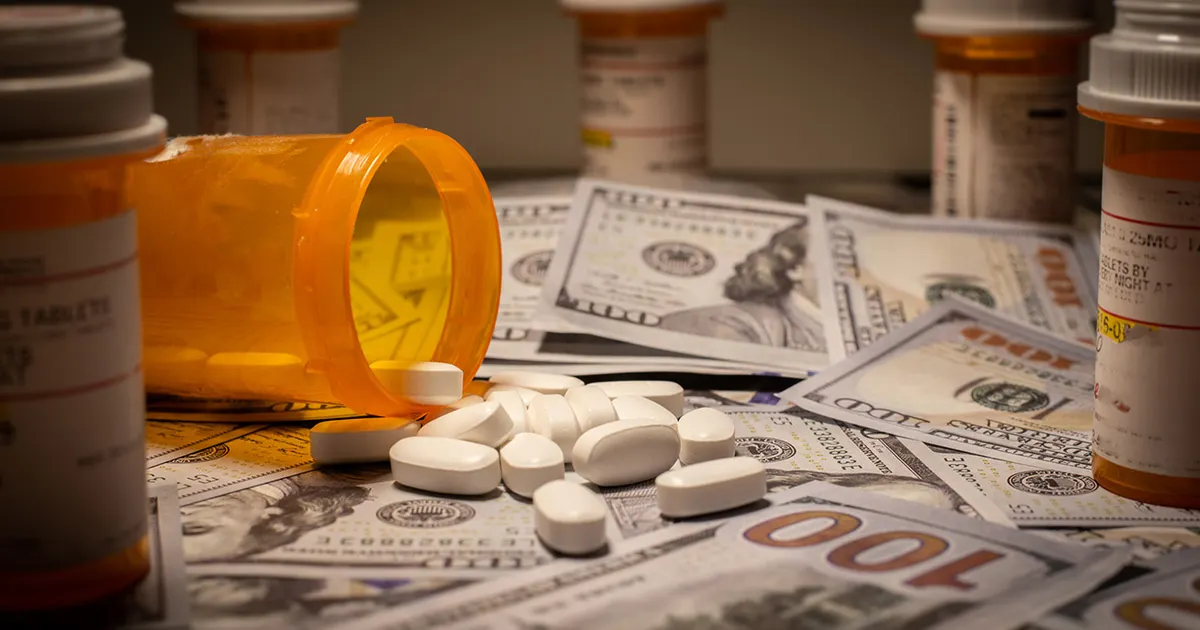
FILE – Prescription medication strewn out on U.S. currency. (Getty Images)
The Trump administration announced on Tuesday it will move to end Medicare Part D, a Biden-era program that aimed to keep premiums stable for prescription drug plans.
Read more Sen. Lindsey Graham remembered at funeral service in South Carolina
The administration claimed Medicare Part D only benefited private insurance companies that offered the coverage but did not actually help enrollees.
What is Medicare Part D?
Medicare Part D provides prescription drug coverage for millions of people through private insurance plans.
Regular Medicare, which most people qualify for after turning 65, does not come with prescription coverage, known as Part D. People must choose that separately.
The optional coverage helps people pay for brand-name and generic medications.
Another roughly 34 million people have Medicare Advantage plans, which are privately run versions of Medicare that often come with prescription coverage.
Read more More Americans now use marijuana daily than tobacco, survey shows
Why you should care:
Medicare Part D will no longer be offered in 2027, which means millions of older Americans could face higher Medicare drug premiums next year.
“It’s certainly possible that without this enhanced financial support in place for 2027, some Medicare beneficiaries enrolled in [Part D plans] could face relatively steep premium increases for drug coverage next year,” Juliette Cubanski, director of KFF’s program on Medicare policy, told The Washington Post.
Insurance companies that offer Medicare Part D include UnitedHealth Group, Humana, and Aetna, according to Reuters.
Read more Case tracker: Here is where flesh-eating bacteria cases have been reported in the US
About the Author