TAMPA, Fla – A fatal Amazon cargo jet crash at Miami International Airport has refocused attention on airport runway safety systems across Florida.
Read more Air Force One pilot recounts the mission to protect the President on September 11, 2001
Investigators said the cargo jet rolled roughly 1,300 feet off the end of the runway Sunday, slamming into a shuttle van and killing five airplane cleaning crew members inside.
Florida airport safety systems
What we know:
Six Florida airports currently use on an Engineered Material Arresting System, known as EMAS, at the ends of their runways.
Neither Miami International Airport nor Tampa International Airport use the crushable technology.
How EMAS technology works
Dig deeper:
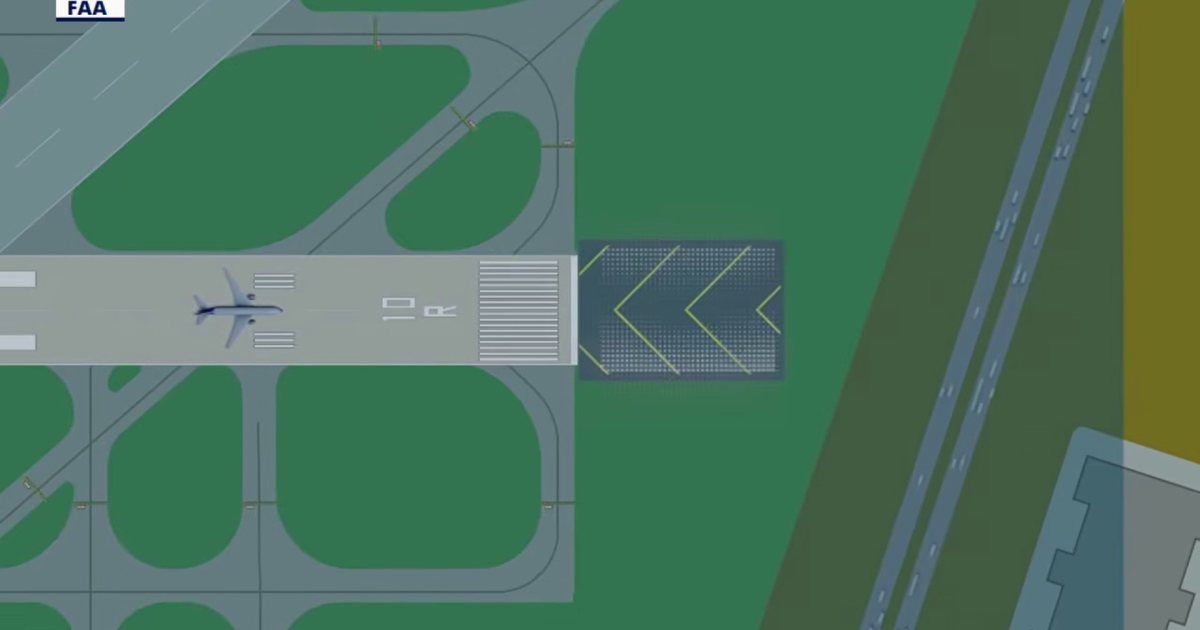
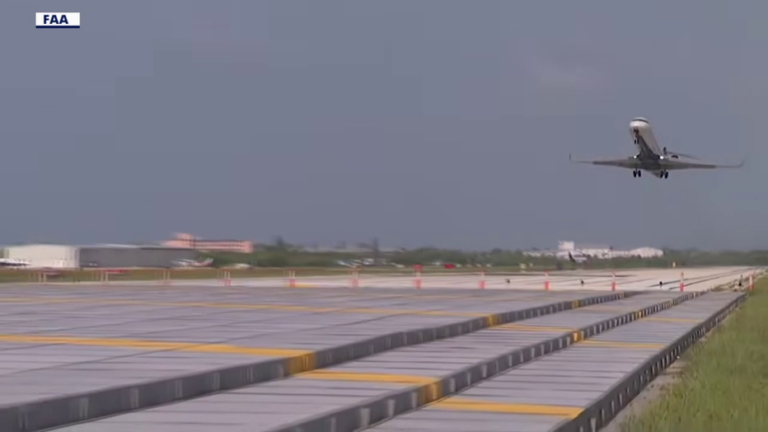
According to Federal Aviation Administration video, the system places crushable cellular cement or foamed silica at the end of a runway.
When a plane runs off the pavement, the tire weight crushes the material, sinking the wheels to rapidly slow the aircraft down.
The FAA credited the technology with preventing injuries just one year ago when a plane overran a runway at Boca Raton Airport.
Tampa runway compliance standards
Local perspective:
Federal rules require airports to maintain a 1,000-foot safety barrier at the end of every runway.
Read more Florida congressional race: Retired Army Brig. Gen. Leela Gray challenges Rep. Anna Paulina Luna
Tampa International Airport officials told FOX 13 that all local runways fully comply with the federal standard.
Experts with TPA added that EMAS is not considered a preferred safety enhancement when other more traditional options are available.
For travelers looking at aerial maps of TPA, the physical clearance at the end of some of the runways might appear tighter than 1,000 feet of open terrain.
However, TPA officials clarified to FOX 13 that some of their runways officially stop before the pavement runs out. So that extra pavement at the end counts toward the required 1,000 foot safety zone.
Miami safety buffer rules
What they’re saying:
It’s a similar argument for Miami International Airport.
Even without a runway excursion system, Miami’s airport appears to be compliant with federal rules because it has a 1,000-foot (305-meter) safety buffer at the end of its runways, experts added.
Information gaps remain
What we don’t know:
Federal investigators have not stated whether an EMAS grid could have prevented the cargo jet from reaching the perimeter road.
Read more Jury selection underway in Bartow for 2020 Frostproof triple murder suspect
About the Author