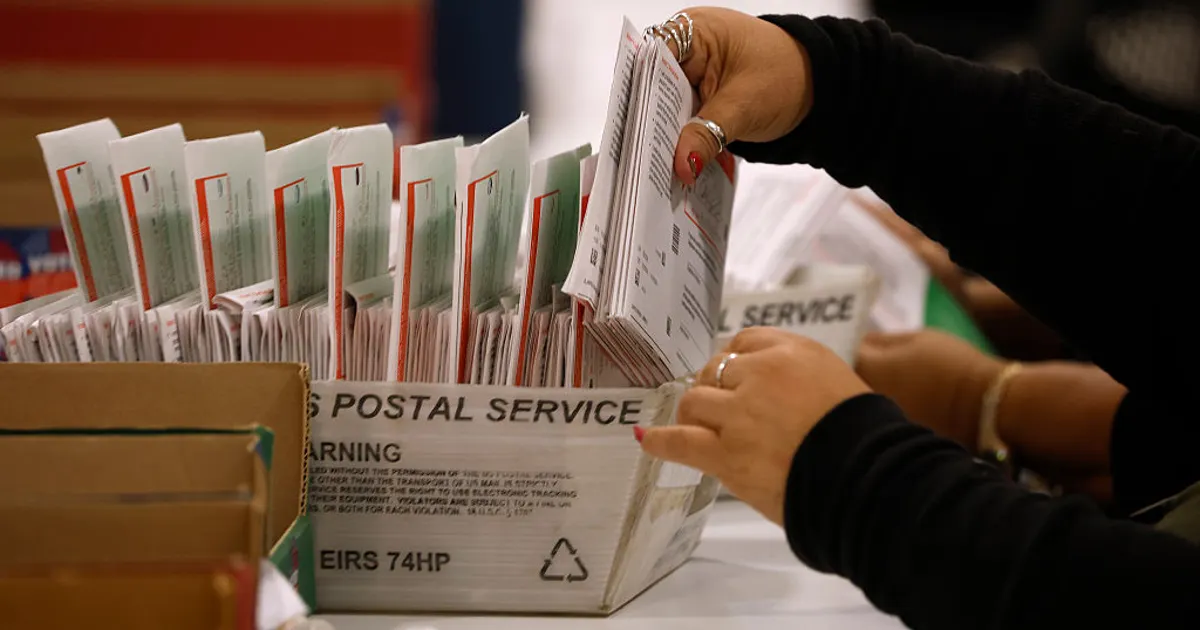
FILE-An election worker processes mail-in ballots for the California state primary election at the Los Angeles County Ballot Processing Center on June 05, 2026 in City of Industry, California. (Photo by Justin Sullivan/Getty Images)
Read more Colorado police officer uses body cam to communicate in Mandarin in traffic stop
The Supreme Court’s decision granting preliminary approval for President Donald Trump’s order restricting mail voting might not lead to an election method change during the midterm elections in November.
According to The Associated Press, a second injunction prohibiting the U.S. Postal Service from making changes to comply with Trump’s directive remains in effect.
RELATED: Supreme Court rules states can count late-arriving mailed ballots, rejects Trump-led challenge
This rule also requires a particular layout for envelopes containing mail ballots and requires states to use an electronic system to identify to the Postal Service who is voting by mail. If states don’t comply with the rule, their mail ballots won’t get sent.
Supreme Court mail-in ballot decision
Dig deeper: The Supreme Court’s order opens a path for the Trump administration to begin action to restrict mail voting, however, it may lead to more litigation that might freeze the federal government again.
Read more Jury unanimously recommends death penalty for Jennifer Odom’s convicted killer
Meanwhile, the Trump administration filed a motion on Monday requesting that the second hold be removed and has posted new regulations from the Postal Service that would start Tuesday if the legal route were cleared.
Democratic officials in 23 states and Washington, D.C. sued to block the order. Officials contend that the Constitution gives states and Congress the power to run elections, and Trump’s changes may cause problems.
Moreover, the Election Assistance Commission found that 29% of voters in 2024 cast their ballots through the mail.
Still, Trump has to date been unable to make the changes he’s demanded because the Constitution grants control of voting rules to states, and in federal elections, to Congress — not the president.
Legal experts weighed in, telling the AP that this is why they believe it’s unlikely Trump’s order will be enforced. The majority in the Supreme Court’s unsigned order noted that it hasn’t determined whether the measure is constitutional.
Read more 15-year-old arrested after teen stabbed near Lennard High School: HCSO
About the Author