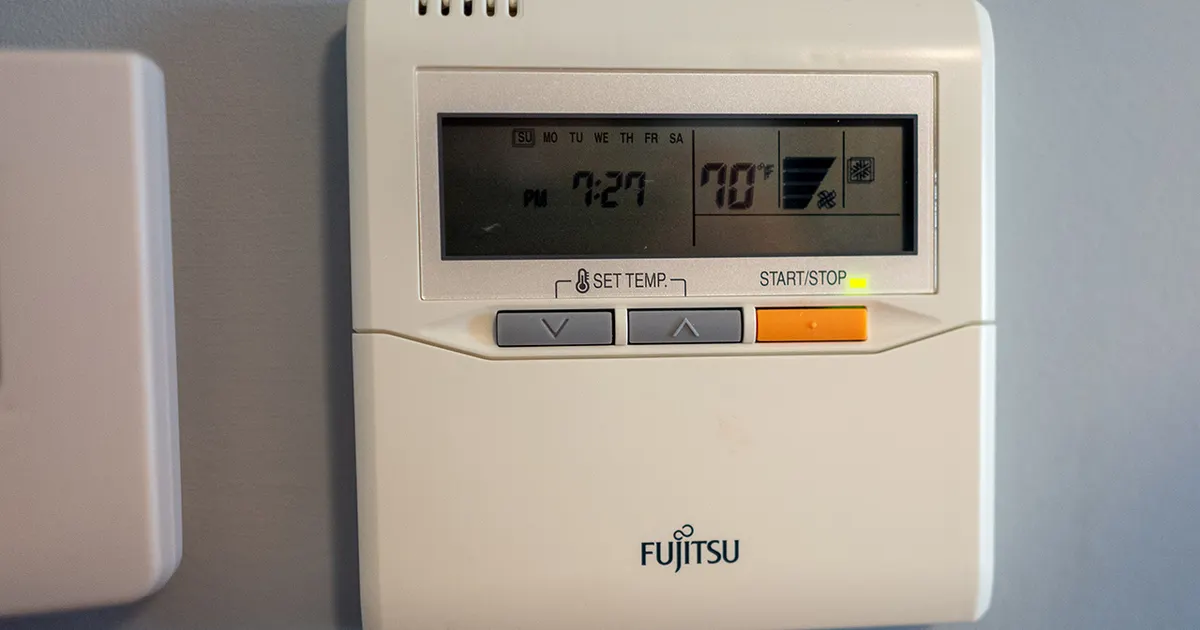
Close-up of logo for Fujitsu on a heat pump air conditioner control panel, Southwest Harbor, Maine, June 13, 2026. (Photo by Smith Collection/Gado/Getty Images)
The age-old debate about what to do with the air conditioning when no one is home is heating up, especially as a record-breaking heatwave grips the eastern United States.
Some people will insist that shutting off the A/C when leaving and turning it back on when getting home is the best way to save on the electric bills. However, others claim that strategy just means the air conditioner will have to work that much harder when it is fired back up.
Why you should care:
The right A/C plan can mean big savings. The U.S. Department of Energy estimates that a 7-10 degree swing for eight hours a day can shave approximately 10% off the heating and cooling bill. Increasing the thermostat by a single degree can reduce cooling costs by approximately 3%, Arizona State University mechanical engineering professor Patrick Phelan estimated.
Unfortunately, that does not mean everyone should make a stop by their thermostat every time they leave the house, or possibly any time they leave.
What they’re saying:
“If you’re gone for like 15 minutes to go to the grocery store, you don’t get any gain,” said Elizabeth Hewitt, professor and urban planning expert at Stony Brook University. As a general rule, though, she added, “if you’re going for your work day, say for eight hours or so, you’ll almost always save more energy and money by turning things off.”
RELATED: Heat map: Here’s who’s least likely to have air conditioning
Climate concerns
Those who are in dry climates, like Arizona, can afford to let the temperature rise in their home, but those in humid ones, like Florida, have to weigh other factors. There, a warmer home can become a damper home. That not only makes it harder to cool, but it also could increase the chance of mold.
Read more Missing South Carolina 4-year-old girl believed dead; Parents arrested
Regarding repairs
Whether turning off the A/C every time the house is empty actually saves money can come down to more than just the electric bill. Phelan points out that doing so may cause greater wear on the cooling system because it can take an air conditioner 15 to 30 minutes before it is performing most efficiently. That extra workload could mean more calls to the HVAC repair shop.
What you can do:
Phelan estimated that getting a smart thermostat could result in a 10% savings as the device learns the patterns of the household and when people are coming or going. It will then automatically raise the temperature when no one is there. Plus, it means the people who live there do not have to always remember to change it themselves several times a day.
Extra savings
Plus, there are always tips and tricks that have nothing to do with air conditioning, but plenty to do with staying cool. Things like opening the windows at night when the air is cooler. While that will help in those drier climates, the wetter ones still have to keep in mind the humidity. That cooler, damper air is just more moisture the A/C will need to take out later.
Hewitt also noted that simply closing the blinds can make a several-degree difference, a fact echoed by Phelan. He pointed out that some blinds will reflect sunlight, and, similarly, there is the option of getting tinted window films.
No matter what, though, there is still plenty of time to make a plan and start saving. Even when this heatwave ends, the dog days of August are still more than a month away.
Read more Nathan’s hot dog eating contest champs Chestnut, Sudo win again in 2026
About the Author